
By Patrick Wanis, PhD
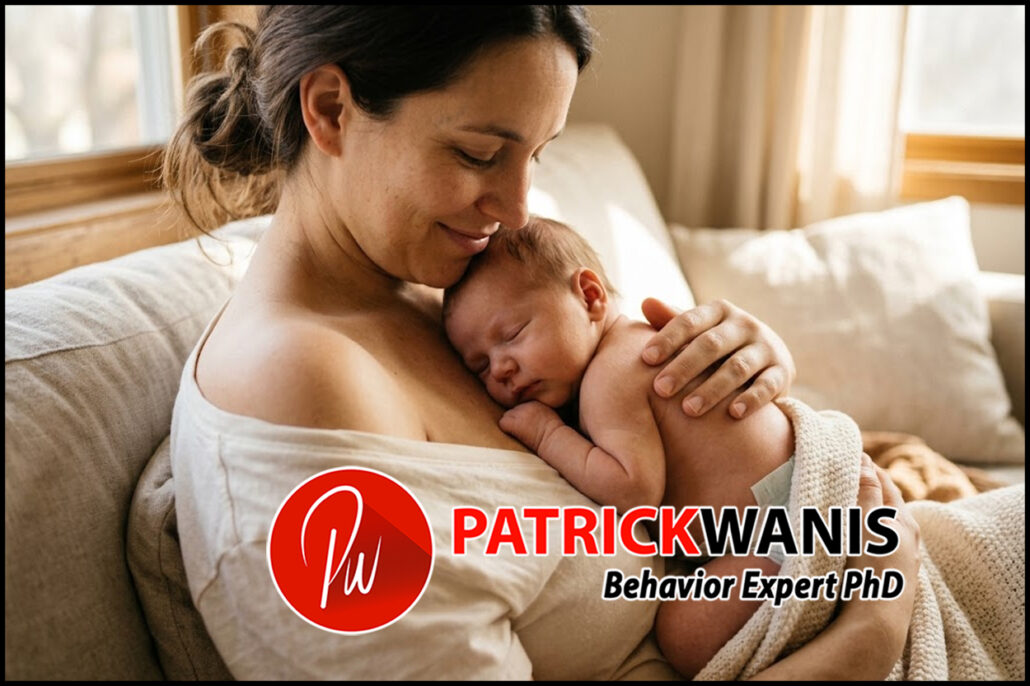
A mother holds her crying infant close to her chest. The infant immediately stops crying and is soothed.
This isn’t just an act of comfort, love, and maternal instinct.
It’s a profound, bi-directional physiological process: the mother’s body is actually helping regulate her baby’s body and nervous system.
The connection between a mother and her infant isn’t just psychological; it’s also deeply biological.
A newborn infant enters the world with an immature, developing nervous system. They lack the neurological capability to self-regulate when overwhelmed by cold, hunger, fear, sensory stimulation, or overstimulation. To survive and stabilize, an infant depends on a primary caregiver for co-regulation.
In many ways, the mother’s body functions as an external regulator for her child’s developing nervous system. Through physical proximity, touch, warmth, voice, and responsiveness, she helps lower her child’s stress response and communicates biological signals of safety.
Mother–Infant Connection and Regulating Body Temperature
One of the most extraordinary examples of this physiological co-regulation by mother-infant can be observed during skin-to-skin contact.
A mother’s body helps regulate her infant’s temperature, providing warmth and supporting thermal stability when the newborn’s own thermoregulatory system is still immature.
This two-way physiological connection does much more than regulate temperature. Research on direct skin-to-skin contact has associated it with:
- Greater stability of heart rate and breathing in infants
- Lower stress and cortisol
- Reduced crying and distress
- Increased oxytocin, supporting bonding and breastfeeding
Thus, when you hold your baby against your skin, your body heat, touch, smell, voice, and physiological rhythms become part of a biological anchor that helps bring your infant’s activated system back toward balance.
Mother–Infant Connection – How Babies “Read” Your Nervous System
Infants cannot comprehend the cognitive meaning of adult stress or understand adult words, but they are extraordinarily responsive to somatic and physiological cues.
An infant’s developing nervous system is continuously responding to cues of safety and threat in the environment. Because they cannot evaluate the room intellectually, they evaluate you, the mother. They receive information about your emotional and physiological state through numerous micro-signals:
Muscular Tension: A rigid, tight hold can communicate tension or arousal, while a relaxed, yielding posture communicates safety. Think of how you grab someone when you’re angry compared with the way you hug or hold someone when you’re soft, affectionate, or loving.
Vocal Tone and Rhythm: Sharp, rapid, or erratic vocalizations can increase arousal, while slower, melodic, rhythmic tones can be soothing. Think of the way your voice changes when you’re frightened or angry compared with your voice when you feel peaceful, loving, and reassuring.
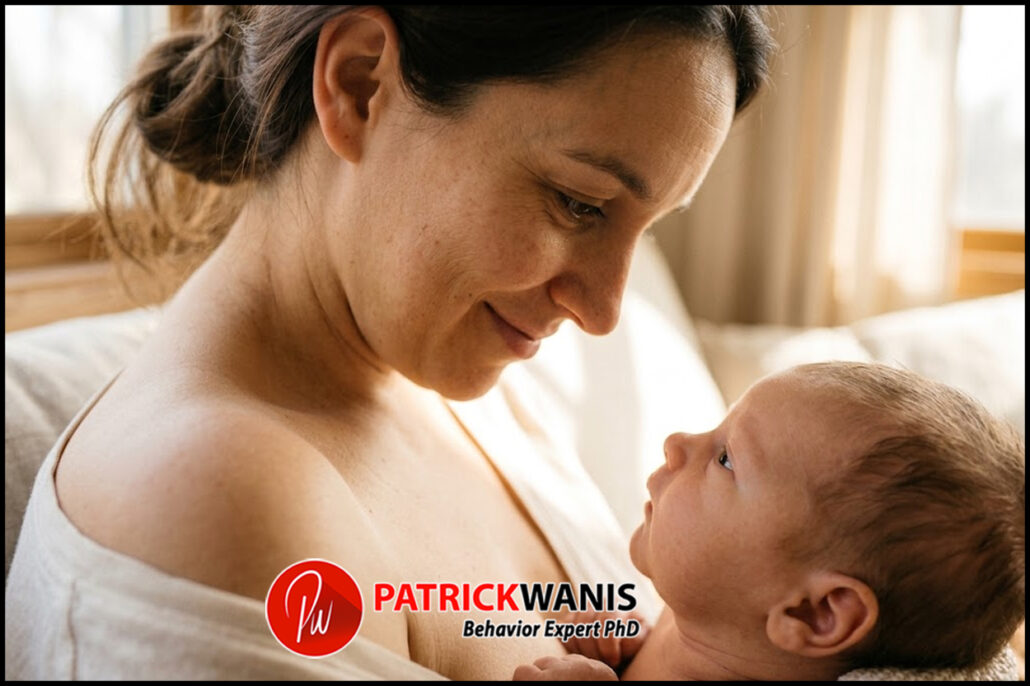
Facial Expression and Eye Contact: A frozen, frightened, or emotionally flat expression can disrupt connection, whereas soft eyes and a responsive face communicate engagement and security. When you respond to your baby’s expressions and emotions, you are communicating: “I see you. I am here. You are safe.”
Breathing Patterns: Rapid, shallow breathing often accompanies heightened arousal, while slower breathing, combined with relaxed touch, posture, and vocal tone, contributes to the overall physiological signals of safety.
Through these repeated interactions, the infant uses the mother’s regulated state to help settle their own activated nervous system. Conversely, persistent unpredictability or high emotional arousal in a caregiver can repeatedly activate the infant’s stress response and make it more difficult for the infant to return to a regulated state.
The Power of Mother-Infant Co-Regulation in Action: The Case of Mark
This dynamic was illustrated perfectly during a session with my client, Kim, when she described her experience with her young son, Mark, who is only eight months old.
She explained that Mark can be screaming intensely, red-faced, and deeply distressed. Yet the moment she picks him up and holds him against her body, he almost immediately settles down, grows quiet, and sometimes even begins laughing.
This is a textbook example of real-time co-regulation.
Mark’s sudden shift from intense distress to calm and even joy isn’t magic—it is neurobiology. His mother’s presence, smell, voice, warmth, familiar touch, and responsiveness provide powerful signals that his developing nervous system associates with safety.
A baby’s strong desire for immediate physical contact isn’t necessarily evidence that something has gone wrong or that the child is being “spoiled.” Seeking proximity to a familiar caregiver is a fundamental attachment behavior. The baby has learned that this person represents warmth, protection, comfort, and safety.
Perfect Calm Isn’t Required: The Importance of Repair
When you understand co-regulation, it’s easy to panic and think, “What happens when I am stressed, overwhelmed, or anxious? Am I ruining my child’s nervous system?”
No.
No parent can remain perfectly calm and regulated all the time. Nor is it necessary. Human life is filled with stress, fatigue, frustration, and moments of emotional disconnection.
What shapes a child’s long-term emotional development isn’t the complete absence of parental stress, but the overall pattern of safety, responsiveness, connection, and repair.
After a difficult interaction or period of disconnection, physical contact, a soothing voice, responsiveness, and reconnection can help repair the rupture. These experiences teach the child’s developing brain an essential lesson:
Stress may happen, but distress can be resolved, connection can be restored, and safety can return.
How Co-Regulation Becomes Self-Regulation
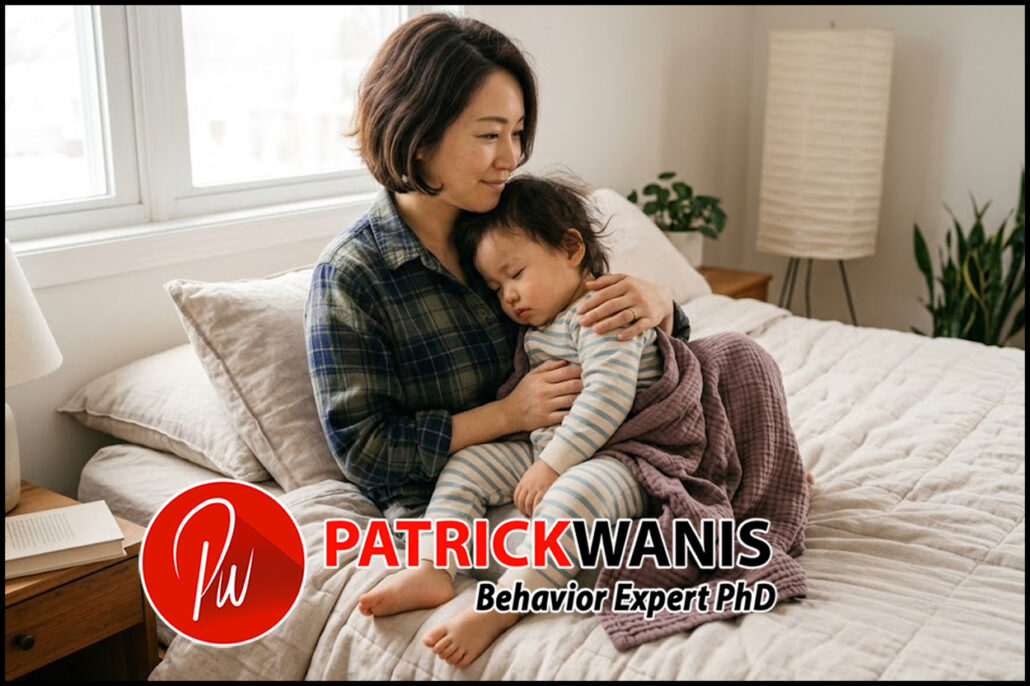
Self-regulation doesn’t suddenly appear as a child gets older. It develops through thousands of earlier experiences of co-regulation.
An infant who repeatedly experiences distress followed by comfort and physiological settling gradually learns a fundamental pattern: activation can subside, distress can be tolerated, and safety can return.
Over time, what the caregiver initially provides externally begins to become an internal capacity within the developing child.
In other words, before children can regulate themselves, they first learn regulation through you.
Final Thought: Building the Foundation of Future Resilience
In an earlier article, I revealed how parents shape their child’s nervous system in ways that can either increase vulnerability to anxiety or help build resilience. Co-regulation is one of the foundations of that process.
Before a child can learn effective self-regulation, they must first experience thousands of micro-moments of co-regulation as an infant and young child.
Every time you hold your baby, respond to their distress, soften your voice, slow your breathing, and allow your body to help soothe theirs, you aren’t simply calming a momentary cry.
You are repeatedly giving their developing brain and nervous system the experience of moving from distress back to safety.
Over time, these experiences help build the neural pathways involved in emotional regulation and resilience and help shape the extent to which that child comes to experience the world as safe or threatening—and how effectively they regulate stress and anxiety later in life.
Before your child can create their own sense of safety, they experience it through you.

Patrick Wanis, PhD, is a renowned relationship and behavioral expert with over 25 years of experience. Creator of SRTT Therapy (Subconscious Rapid Transformation Technique), he specializes in resolving root causes of trauma and other conditions without reliving pain or retraumatization. He has developed various psychological assessments on emotional intelligence, relationships, self-sabotage, and authenticity, and serves diverse clients from celebrities to teens. A trusted media source, Global media including CNN, BBC, FOX News turn to Wanis for insights into relationships, sexuality, human motivation, trauma, communication, body language, and persuasion.