
The Fake 49er Romance Scam – were they all just plain stupid, greedy or gold diggers?
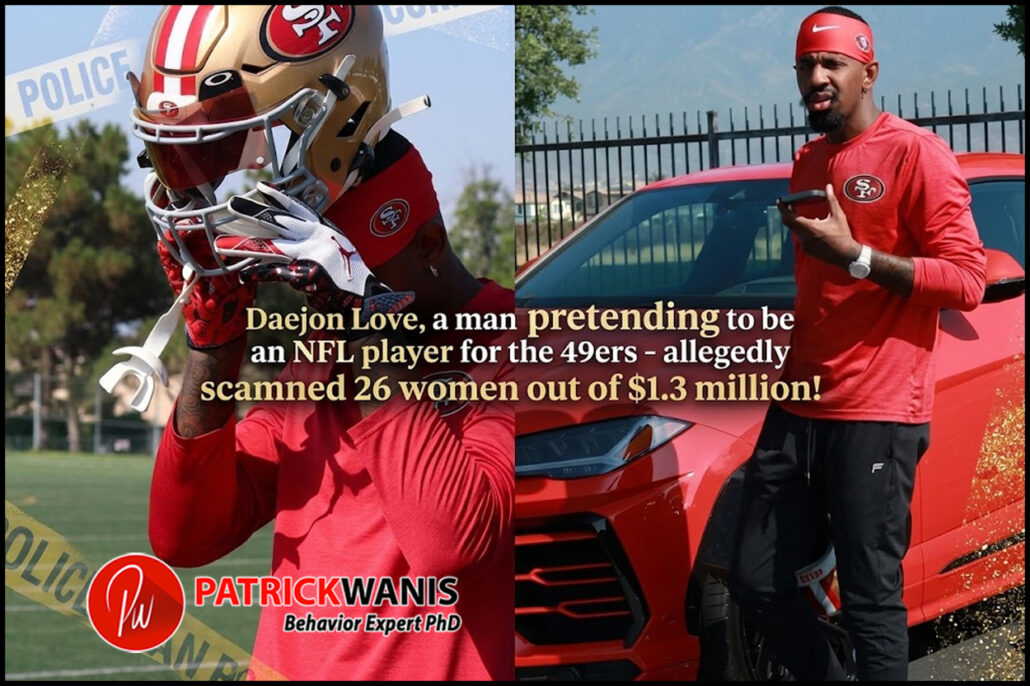
Daejon Love, a man pretending to be an NFL player for the 49ers, allegedly scammed 26 women out of $1.3 million!
How do so many women get fooled in a romance investment scam? Are they all just plain stupid, greedy or gold diggers?
Believing that only stupid or gullible people get scammed creates a dangerous blind spot. Intelligence doesn’t make you immune to manipulation because scams don’t target your ability to reason; they target your emotions, desires, fears, and vulnerabilities.
Thirty-five-year-old Daejon Love was arrested and charged with allegedly defrauding more than two dozen women by creating an elaborate false identity. According to federal prosecutors, Love portrayed himself as a professional football player for the San Francisco 49ers and a wealthy real-estate investor. He cultivated romantic relationships online, displayed an extravagant lifestyle, presented fictitious investment balances, and offered supposedly exclusive financial opportunities—supported by an accomplice posing as his financial adviser, Taylor Jamie Chan, 18.
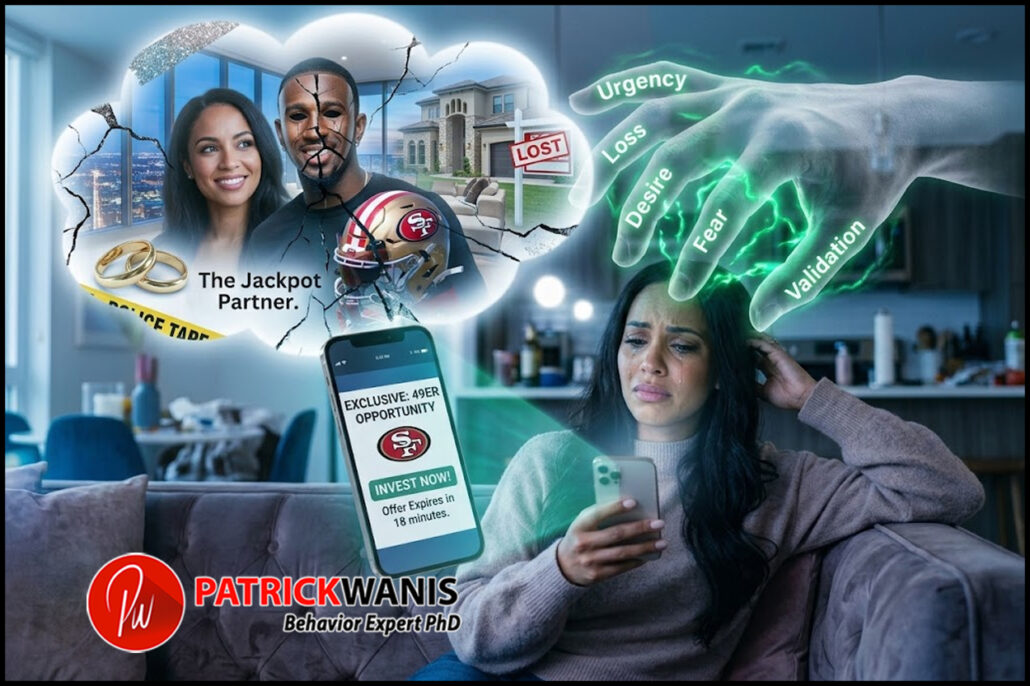
These women were not simply being sold an investment. They were being sold a fantasy of romance, wealth, status, security, exclusivity, and an extraordinary future. As I’ll explain, the scam weaponized several psychological mechanisms simultaneously: desire, anticipated reward, FOMO, loss aversion, confirmation bias, sunk cost, and cognitive dissonance.

The Psychology of the “Jackpot Partner”
Greed isn’t just about cash; it manifests as the desire for sudden, unearned elevation—the fantasy that a particular person or opportunity will instantly transform your life.
Imagine believing you’ve met a successful professional athlete who is wealthy, connected, attracted to you, and wants to build a future together. You aren’t just being offered a date; you’re being offered entry into an exclusive world.
The greater the anticipated reward, the easier it is to overlook threat signals. This is where the Halo Effect distorts judgment. We unconsciously attribute positive characteristics such as honesty, intelligence, discipline — to someone simply because of qualities we admire, such as wealth or physical attractiveness.
Status also creates borrowed credibility. If someone like Daejon Love appears associated with an elite institution like the NFL, we unconsciously transfer that institution’s authority directly to the individual: If he’s in the NFL, he’s successful; if he’s successful, he understands money; if he wants me to invest, he has access to opportunities ordinary people don’t.
Con artists don’t sell investments; they sell projections. They identify what you deeply long for – love, status, validation, security – and build a false reality to match. The con artist seeks to fill your void! (Read my article on How Gullible Are You? Gurus, Cults & Manipulation)
The Fake 49er Romance Scam – The Weaponization of FOMO
Desire makes the fantasy attractive, but FOMO creates the pressure to act.
- Artificial Urgency: Scammers present opportunities as scarce or time-sensitive. Time allows a victim to think critically, investigate claims, and spot inconsistencies. Forced urgency bypasses due diligence and appeals directly to emotion.
- Scarcity & Significance: An investment available to everyone feels ordinary; an opportunity accessible only because you are dating an insider feels extraordinarily valuable. Access itself promises that you’ve become part of an exclusive inner circle. Suddenly, you feel significant! Bernie Madoff used this exact dynamic by turning away prospective investors, which only drove them to pursue him more aggressively.
- Loss Aversion: Once the romance and the financial pitch intertwine, loss aversion takes over. The victim isn’t just afraid of missing a return; she fears losing the man, the lifestyle, and the future she envisioned. Questioning the investment feels like risking the relationship.
Confirmation Bias: Seeing What These Women Wanted to Believe
Outsiders always ask: How could they ignore the obvious warning signs?
The answer lies in confirmation bias. Once emotionally invested in a desired outcome, the brain selectively accepts details that confirm the fantasy while rationalizing away red flags. Luxury photos, social media posts, fabricated bank statements, and fake financial advisers all serve to corroborate the lie. That’s what Daejon Love and his ‘financial assistant’ allegedly did.
Contradictory evidence is easily dismissed: “There’s a reasonable explanation; the records haven’t updated; people are just jealous of our relationship.” The stronger the desire for the story to be true, the easier it is to protect the delusion.
Why Victims Double Down
Eventually, something breaks: a withdrawal is delayed, a promised return vanishes, or the story changes. Yet, victims often refuse to walk away.
Why?
Sunk cost and fallacy and cognitive dissonance lock the trap:
- Cognitive Dissonance: Accepting the truth means confronting a devastating reality: the relationship was fake, the warning signs were ignored, and the future died. For someone who views herself as intelligent and cautious, admitting that she was duped creates a violent mental conflict. To relieve that pain, she searches for explanations that allow her first belief to survive.
- Sunk Cost Fallacy: Having invested thousands of dollars and months of emotional energy, walking away feels impossible. Instead of recognizing “I’ve lost too much, I must stop,” the brain lies: “I’ve put so much into this, I can’t quit now.” The drive to recover what was lost leads to total ruin.
Protecting Yourself: Know Your Void
The primary key to protecting yourself from manipulation isn’t tracking suspicious behavior; it is identifying your own psychological vulnerabilities.
What is your void? Is it money, romantic love, loneliness, status, validation, or the longing to finally be rescued and chosen by someone extraordinary? A skilled manipulator doesn’t need to outsmart you intellectually if he can identify what you desperately crave and convince you that he holds the key: he can fill that void!
Non-negotiable boundaries:
- Never combine early-stage romance with loans, investments, or business deals.
- Treat urgency and exclusivity as immediate red flags, not privileges.
- Independently verify all financial and professional credentials through official third-party sources—never through screenshots, photos, or documents provided by the person making the claim, particularly on social media – Instagram.
Ask yourself honestly: Am I attracted to who this person actually is, or am I being seduced by what their wealth, status, and promises represent to me?
Know Thyself!
In summary, were these women stupid to fall for the Fake 49er Romance Scam? No. They were targeted with an elaborate false reality engineered around fundamental human desires: love, security, status, and belonging. This romance scam is also sometimes referred to as Pig Butchering Scam.
The ultimate shield against manipulation isn’t pride in your intelligence. It is total self-awareness of the emotional needs, desires, and fears that can hijack your logic. Know Thyself! The moment someone appears to offer you everything you’ve ever wanted, that’s your cue: Stop, slow down, and question what you are truly being sold. Be aware of your vulnerabilities and protect yourself!

Patrick Wanis, PhD, is a renowned relationship and behavioral expert with over 25 years of experience. Creator of SRTT Therapy (Subconscious Rapid Transformation Technique), he specializes in resolving root causes of trauma and other conditions without reliving pain or retraumatization. He has developed various psychological assessments on emotional intelligence, relationships, self-sabotage, and authenticity, and serves diverse clients from celebrities to teens. A trusted media source, Global media including CNN, BBC, FOX News turn to Wanis for insights into relationships, sexuality, human motivation, trauma, communication, body language, and persuasion.