
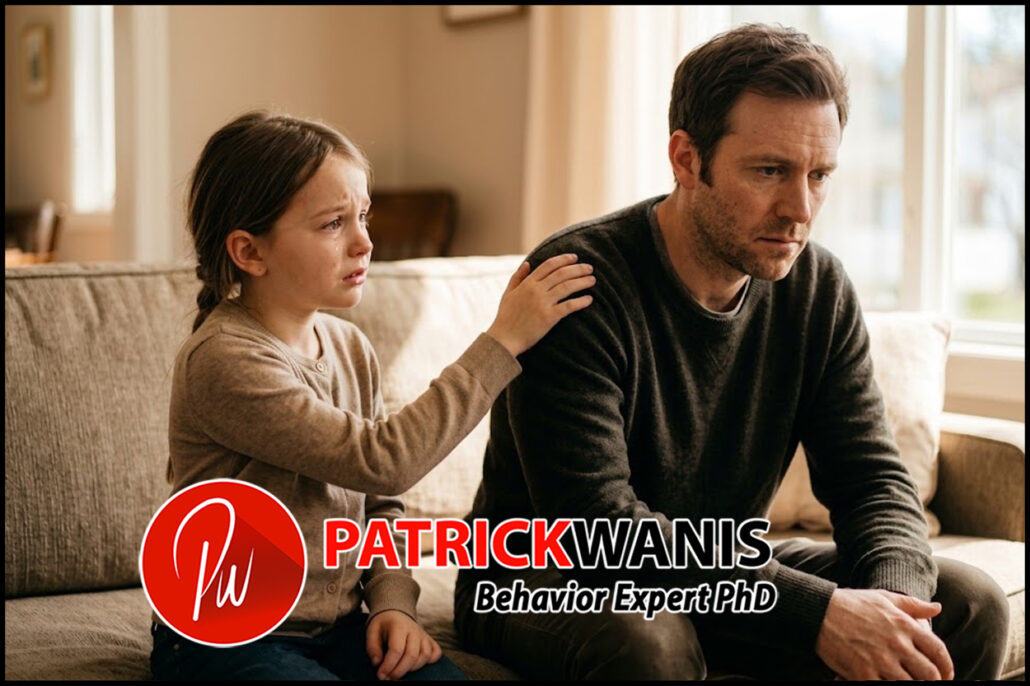
When we think about unhealthy parenting, we usually think about what a parent failed to give a child: love, affection, protection, or emotional support. But sometimes the damage happens because the parent expects the child to give the parent what the child should have been receiving.
This is the crux of father-daughter enmeshment.
A father may genuinely love his daughter, but when emotional boundaries disappear, she is pushed into roles that do not belong to a child. She becomes his confidante, therapist, emotional caretaker, defender, validator, or rescuer. In severe cases, she becomes an emotional substitute for an adult partner, forced to “hold it all together.”
What Is Father-Daughter Enmeshment?
Healthy parenting relies on clear emotional boundaries. A father can be affectionate, share feelings, and build a deep bond with his daughter without making her responsible for his emotional well-being.
Enmeshment happens when those boundaries blur or vanish entirely, leaving the daughter confused about where her identity ends and his begins. This involves emotional parentification, where a daughter assumes adult emotional responsibilities, and emotional spousification, where she functions as an adult partner or primary confidante.
She listens to him complain about her mother and their marriage, reassures his insecurities, soothes his anger, defends him when he feels attacked, or works overtime to keep him emotionally stable. If he continually casts himself as the victim—misunderstood by his wife or mistreated by the world—she steps in as his rescuer.
This triggers the classic Karpman Drama Triangle: Dad becomes the Victim, someone else is the Persecutor, and the daughter is forced into the Rescuer role. She is no longer just loving her father; she has been given a job, and that job now becomes her identity.
Why Does a Daughter Accept the Role of Emotional Surrogate?
Imagine you are eight years old, and your dad shares his deepest feelings with you, telling you things he hides from everyone else. He says you are the only one who understands him, praises your maturity, and relies on your reassurance.
For a little girl, this feels like pure love, attention, connection, and significance. She feels special because dad chose her, and she feels powerful: “I can make dad feel better. I understand him. He needs me.” To maintain that connection, she sacrifices her own authenticity.
- When I’m needed, I’m important.
- When I’m useful, I’m valuable.
- When I rescue someone, I’m loved.
When Being a Special Daughter Becomes an Emotional Burden
A father’s problems are far too heavy for a child to carry or solve. His marriage isn’t hers to fix, his loneliness isn’t hers to resolve, and his self-esteem isn’t hers to raise.
Yet, in Father-Daughter Enmeshment, she spends her childhood walking on eggshells: “How is dad feeling? Is he angry? What can I do to make everything okay?”
She becomes hyperaware of everyone else’s moods while utterly suppressing her own needs because she’s been programmed that dad’s feelings are more important. She adopts a core survival belief: “His feelings matter more than mine. If I don’t take care of him, something bad might happen.”
Instead of experiencing care, she learns to be a caretaker. Instead of being a carefree child, she becomes the responsible adult in the room.
When Dad Recruits His Daughter Against Mum
Loving mum feels like betraying dad; disagreeing with dad feels like abandoning him. She learns early that relationships involve forced alliances, guilt, and picking sides.
How Father–Daughter Enmeshment Sabotages Adult Relationships
- Hyper-Responsibility: The adult woman constantly monitors her partner’s emotional state, assuming that if he is unhappy, angry, or struggling, it’s her job to fix it. She lives on high alert, always looking for what is wrong and trying to “keep it all together.”
- The “Twisted Love” Trap: She repeatedly gravitates toward partners who are troubled, emotionally immature, or perpetually victimized because she knows how to be the rescuer. She feels needed, and being needed feels like love. It becomes her identity, and she doesn’t know any other way to love.
- The Avoidance Reaction: Conversely, some women swing to the opposite extreme, becoming fiercely independent and avoiding needy people because dependency feels like imprisonment. They’ve already spent a lifetime carrying an adult and fear being consumed again.
What Happens When No One Needs You To Rescue Them?
Understanding Your Father Doesn’t Mean Excusing His Behavior

Breaking Free: You Don’t Have to Play a Role to Be Loved
- You can receive support without earning it.
- You can allow someone else to care for you.
- You can have needs without feeling selfish.
The little girl learned: “If dad needs me, I matter.”
The adult woman can learn: “I matter even when I’m not rescuing anyone or holding it all together for everyone!”

Patrick Wanis, PhD, is a renowned relationship and behavioral expert with over 25 years of experience. Creator of SRTT Therapy (Subconscious Rapid Transformation Technique), he specializes in resolving root causes of trauma and other conditions without reliving pain or retraumatization. He has developed various psychological assessments on emotional intelligence, relationships, self-sabotage, and authenticity, and serves diverse clients from celebrities to teens. A trusted media source, Global media including CNN, BBC, FOX News turn to Wanis for insights into relationships, sexuality, human motivation, trauma, communication, body language, and persuasion.