
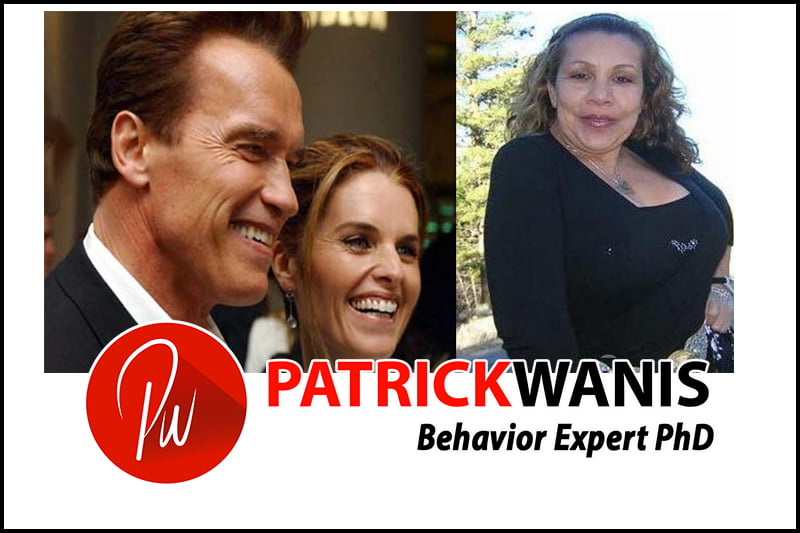
Just a few days apart: The former head of the International Monetary Fund, Dominique Strauss-Kahn, was freed from jail on a million (US) dollars bail on the condition he be confined to a New York apartment under armed guard while he awaits trial on attempted-rape charges and; actor and former California Governor Arnold Schwarzenegger admitted that he cheated on his wife Maria Shriver and fathered a secret child ten years ago with his household staffer – Mildred Patricia Baena – the housekeeper of 20 years.
Why do powerful men cheat and why do powerful men cheat with powerless women? (Arnold Schwarzenegger with his housekeeper, Charlie Sheen has admitted to using prostitutes, Kobe Bryant cheated with a hotel employee in Colorado, President Bill Clinton with an intern and Dominique Strauss-Kahn charged with attempted rape of a hotel maid…)
Radio New Zealand National’s Jim Mora interviews Human Behavior Expert Patrick Wanis PhD for his insights about why powerful men cheat and why they do this with powerless women; Patrick also reveals how men transform and become infected and corrupted when they become powerful and; power is an aphrodisiac to women. Patrick Wanis PhD also cites Lord Acton who in 1887 said “All power tends to corrupt and absolute power corrupts absolutely.”
Also listen here to other radio interviews by Patrick Wanis on cheating such as Power leads to cheating – politicians, athletes & celebrities
Click below to listen to the interview.

Patrick Wanis, PhD, is a renowned relationship and behavioral expert with over 25 years of experience. Creator of SRTT Therapy (Subconscious Rapid Transformation Technique), he specializes in resolving root causes of trauma and other conditions without reliving pain or retraumatization. He has developed various psychological assessments on emotional intelligence, relationships, self-sabotage, and authenticity, and serves diverse clients from celebrities to teens. A trusted media source, Global media including CNN, BBC, FOX News turn to Wanis for insights into relationships, sexuality, human motivation, trauma, communication, body language, and persuasion.