
I recently spent a few months in Puerto Escondido in Mexico. It’s a hotspot for wellness – endless classes and workshops of every type, and then those that you’ve never heard of before!
I quickly noticed the trend – another new buzzword. In fact, every few months the wellness industry invents a new buzzword or slogan:
“Nervous System Reset.”
Social media influencers promise nervous system resets.
Coaches offer nervous system reset programs.
Yoga instructors advertise nervous system reset workshops.
Supplement companies claim their products will reset your nervous system.
What’s the problem?
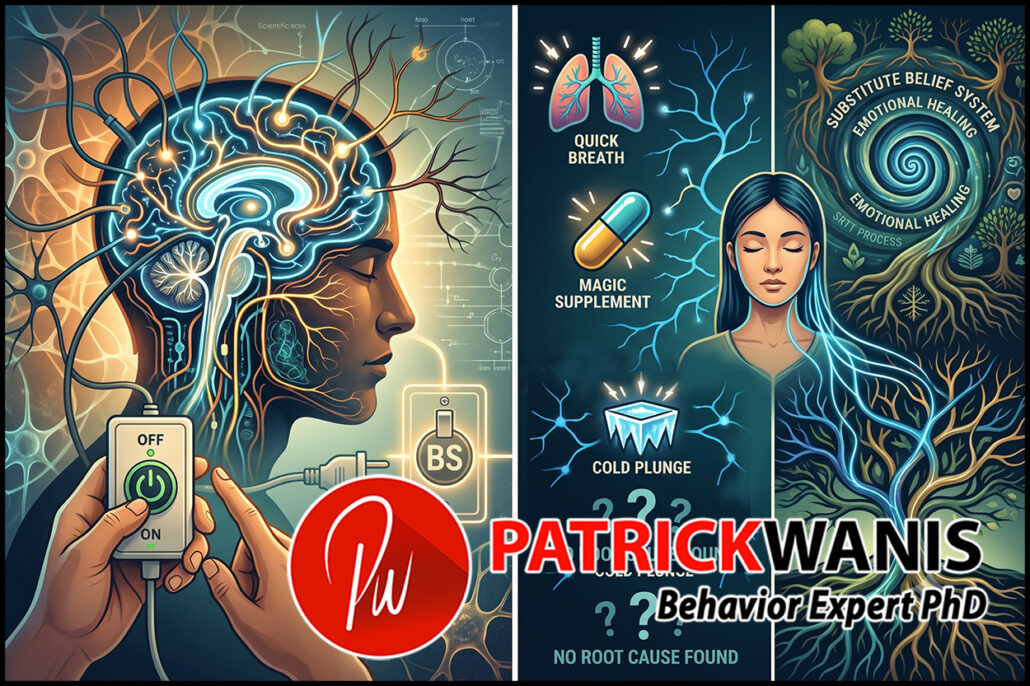
It’s complete marketing BS!
There is no recognized scientific, medical, psychological, neurological, or psychiatric procedure called a “nervous system reset.”
None.
You cannot reset your nervous system the way you restart a computer, reboot your phone, or turn a machine off and on again. You can’t do a “factory reset” of your nervous system!
The phrase sounds scientific.
It sounds impressive.
It sounds like something profound is happening.
But actually, it’s just marketing. And Nervous System Reset doesn’t apply to trauma as I’ll explain later!
What People Actually Mean by Nervous System Reset
When people talk about a nervous system reset, they’re usually describing something much less dramatic:
- Reducing stress
- Calming the body
- Improving emotional regulation
- Increasing relaxation
- Feeling safer
- Sleeping better
- Reducing anxiety
Those are all worthwhile and valuable goals.
But none of them involve “resetting” the nervous system.
A more accurate description is:
Helping the body move from a prolonged state of stress and hypervigilance toward a more balanced and regulated state.
That’s not as sexy, marketable or dramatic as Nervous System Reset!
But at least it’s accurate and truthful.
The Real Issue: Chronic Stress
Many people spend years living in survival mode.
They become accustomed to:
- Worrying
- Anticipating problems/catastrophizing
- Scanning for danger
- Carrying responsibility for everyone else
- Feeling guilty when they rest
- Remaining emotionally guarded
- Being hypervigilant
- Chronic anxiety
Over time, these patterns become familiar.
The body learns them.
The mind learns them.
The emotions learn them.
Healing is not about pressing a reset button. Real healing is about resolving the root cause of a dysregulated nervous system.
Most likely this began in childhood with parents or caregivers who were emotionally dysregulated themselves. The child’s nervous system was co-regulated by the caregivers who may have also failed to provide:
- Safety
- Security
- Stability
- Connection
- Support
- Trust
- Rest/Calm
- Playfulness
- Free Emotional Expression
- Compassion
(To understand the exact neurobiology of how this happens, read my guide on how a parent’s emotional state shapes a child’s developing nervous system and leads to anxiety.)
Thus, healing occurs through specific processes and techniques, not magic, one-off yoga or sound bath classes! And I practice yoga daily and I attend and participate in sound bath workshops. They are beneficial and supportive – but they don’t magically heal you of all your trauma.

Why The Term Nervous System Reset Became Popular
The phrase “nervous system reset” became popular because it offers something people desperately want:
A quick fix.
Most people would rather believe that a breathing exercise, supplement, cold plunge, sound bath, workshop, retreat, or weekend course can reset decades of stress, trauma, conditioning, and emotional habits.
Unfortunately, the human mind and body don’t work that way. Specific processes are needed to heal trauma, change your subconscious beliefs, cognitive structure, and to create self-compassion.
Discoveries in neurobiology show that chronic stress fundamentally alters the communication pathways between the prefrontal cortex and the amygdala, trapping the body in a persistent survival state. You can read the foundational neuroscience study on stress circuitry here.
The Truth About Healing The Nervous System
In my work as a trauma therapist, I’ve never seen people improve because they discovered a magical technique.
People improve when they identify and resolve the underlying experiences that are driving their stress, anxiety, fear, hypervigilance, shame, guilt, self-doubt, anger, or emotional suffering.
For example, a person may spend years trying to calm their nervous system through meditation, yoga, breathing exercises, supplements, massages, sound baths, cold plunges, or retreats.
Those activities can be valuable.
They may help reduce stress.
They may help a person feel calmer.
But they fail to answer a critical question:
Why is the nervous system reacting this way in the first place?
They fail to get to the root cause.
If a child grows up feeling rejected, abandoned, criticized, unsafe, unsupported, unseen, or responsible for everyone else, that child will create subconscious beliefs, emotional associations, expectations, coping strategies, and survival identities.
Those patterns frequently continue into adulthood.
The nervous system is not malfunctioning. It is responding to what the subconscious mind learned years earlier.
This is why true healing requires more than relaxation.
It requires identifying and resolving the underlying experiences that created the problem.
In SRTT (Subconscious Rapid Transformation Technique), I help people:
- Identify the root experiences
• Identify the emotions that were never fully processed
• Identify the subconscious beliefs that were formed
• Identify the expectations that developed
• Understand the survival strategies and identities that emerged
• Release unresolved emotional pain from the body/mind
• Challenge outdated beliefs and interpretations
• Create healthier beliefs, expectations and identities
• Engage self-compassion
When those underlying patterns change, people often experience profound shifts in how they think, feel, behave, relate, and respond to life.
At that point, the nervous system frequently begins to calm naturally because the subconscious reasons for remaining on high alert have been resolved.
That is not a nervous system reset.
That’s subconscious transformation.
That’s emotional healing.
That’s lasting change.

Patrick Wanis, PhD, is a renowned relationship and behavioral expert with over 25 years of experience. Creator of SRTT Therapy (Subconscious Rapid Transformation Technique), he specializes in resolving root causes of trauma and other conditions without reliving pain or retraumatization. He has developed various psychological assessments on emotional intelligence, relationships, self-sabotage, and authenticity, and serves diverse clients from celebrities to teens. A trusted media source, Global media including CNN, BBC, FOX News turn to Wanis for insights into relationships, sexuality, human motivation, trauma, communication, body language, and persuasion.